Ruling Planets are the planets that govern a moment, in a given place. In KP (Krishnamurti Paddhati), they are the rulers of five points of the sky at that moment: the day, the sign and star of the Moon, and the sign and star of the Ascendant. Krishnamurti used these rulers to choose which planets deliver an event and to say when it happens.
The five rulers, in Krishnamurti's list
K. S. Krishnamurti describes the procedure step by step in KP Reader VI, p. 138. The rulers are:
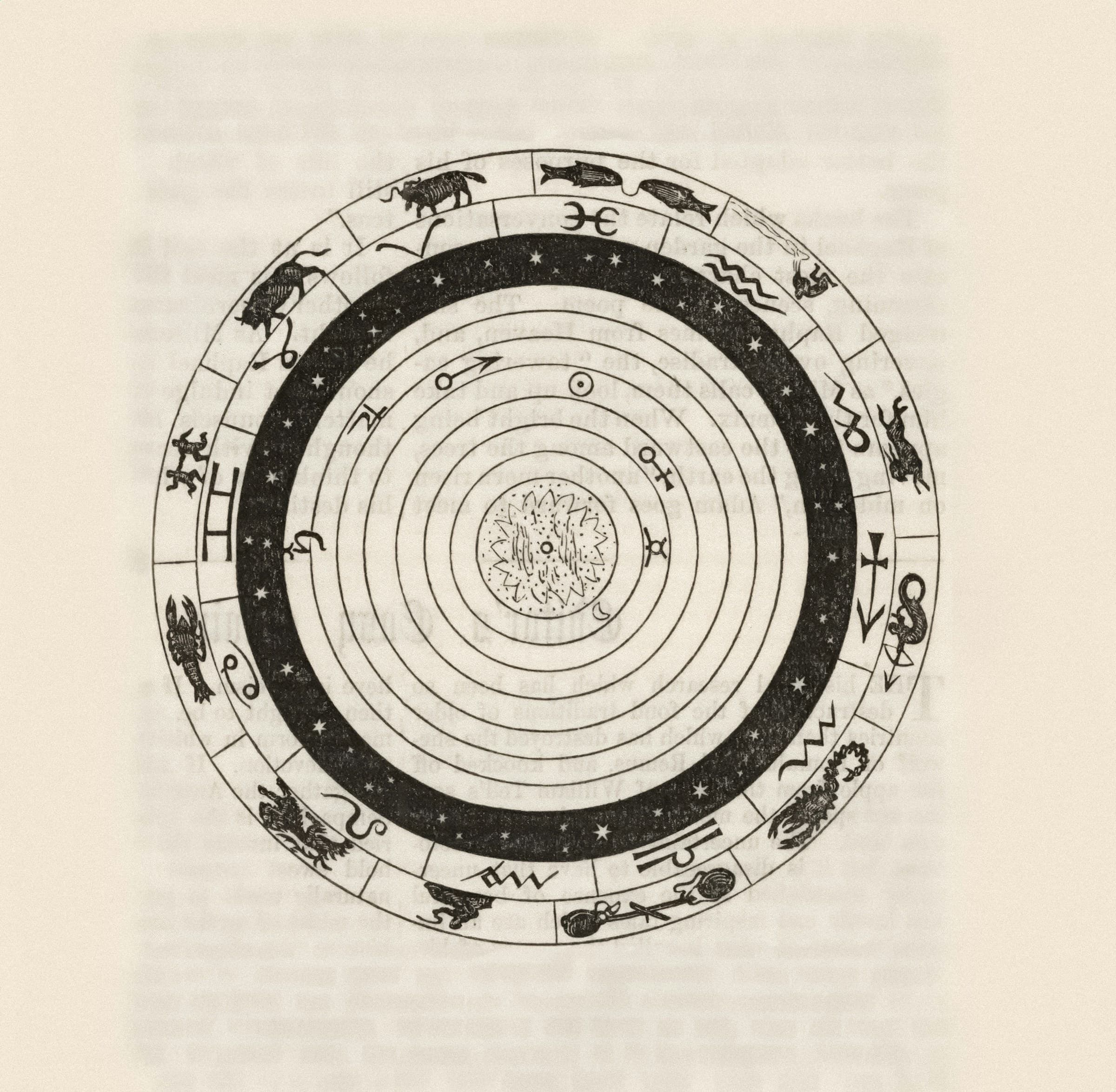
- The lord of the Ascendant's star. The Ascendant is the degree of the zodiac rising on the eastern horizon at that moment, in that place. The star, or nakshatra, is one of the 27 sectors of 13°20' into which the zodiac is divided.
- The lord of the Ascendant's sign.
- The lord of the star the Moon is passing through.
- The lord of the Moon's sign.
- The lord of the day. Sunday belongs to the Sun, Monday to the Moon, Tuesday to Mars, Wednesday to Mercury, Thursday to Jupiter, Friday to Venus and Saturday to Saturn (KP Reader VI, p. 123).
In the book's worked examples, he often writes the shorter list: "the lords of the day, Moon sign, star and lagna" (KP Reader VI, p. 184). After him, some practitioners also started adding the sub-lords of the Ascendant and the Moon. Vedik follows Krishnamurti's list, with all five.
The day begins at sunrise
The lord of the day looks like the simplest factor, and that's where the detail that most changes the result lies. The calendar turns over at midnight. KP turns over when the Sun rises. In Krishnamurti's words, "take that sunrise to next sunrise is a Day" (KP Reader VI, p. 138).
An example with illustrative times: the clock says Monday, 4 a.m., and the Sun only rises at 6 a.m. in that place. By KP, that moment still belongs to Sunday, and the lord of the day is the Sun.
Vedik's engine counts the day this way. It calculates the sunrise on the date and in the place of the moment and only switches the lord of the day after it.
Five factors, not always five planets
The same planet can rule more than one factor. In one of the book's cases, it was Saturday (Saturn), the Moon was in Taurus (Venus), in the star Krittika (Sun), and the Ascendant was Libra (Venus). Venus showed up twice, and Krishnamurti called it "a very strong ruling planet" (KP Reader VI, p. 186). In the method, repetition is a sign of strength.
Three rules refine the list:
- Rahu and Ketu come in as agents. A node occupying the sign of one of the rulers represents that ruler and comes in with it (KP Reader VI, p. 123).
- A ruler in the star of a retrograde planet drops out. The ruler that occupies the star of a planet in retrograde motion is discarded (KP Reader VI, p. 138).
- There is an order of strength. The lord of the Ascendant comes first and the lord of the day comes last (KP Reader VI, p. 185).
Vedik's engine applies all three and delivers the rulers from strongest to weakest.
What they're for
Choosing among many candidates. Sometimes all nine planets signify the houses of a subject. For that case, Krishnamurti writes that "the only scientific method is to go for ruling planets" (KP Reader VI, p. 184). The planets common to both the significators and the rulers are the ones that stay.
Dating. With the common planets in hand, you calculate their joint period in the dasha and the transit points to the moment (KP Reader VI, p. 186). In the case of the messenger sent to the bank, he uses the rulers to find the stretch of the zodiac that would rise in the east on that same day, and from there he derives the time of the return (KP Reader VI, p. 129).
He gave this tool enormous weight. With the rulers, he wrote, one can "decide correctly the nature of event, and predict precisely the moment" (KP Reader VI, p. 128).
Each factor changes at its own pace
| Factor | Changes, on average, every |
|---|---|
| Lord of the day | 24 hours, from sunrise to sunrise |
| Moon's sign | about 2 days and 7 hours |
| Moon's star | about 1 day |
| Ascendant's sign | about 2 hours |
| Ascendant's star | about 53 minutes |
These are averages. The Moon speeds up and slows down, and the Ascendant crosses some signs much faster than others, depending on latitude. Near a boundary, the calculated position is what counts, never the average. That's why the rulers depend on the exact moment and place.
Ruling Planets and dasha
| Dasha and bhukti | Ruling Planets | |
|---|---|---|
| Basis of the calculation | Your birth | The present moment |
| What it answers | Which phase of life this is | Which planets govern this moment |
| Pace | Years and months | Hours and minutes |
| Uses your chart? | Entirely | Only when crossing with it |
The dasha is about you. The rulers are about now. KP crosses the two to fine-tune the timing, as we explain in the guide to bhukti and sub-periods.
How Vedik uses the rulers
When you ask a timing question in the chat and share your location, the engine calculates the five rulers of that moment, in the place where you are. They come in as a layer of confirmation, alongside the active phase of your chart and the transit. The window of dates always comes from your birth chart. The rulers confirm that window or fail to confirm it, and they never create a new date. See how the layers add up in the article on convergence between dasha and transit.
The method indicates the moment. The final word is always yours.
To see what your chart indicates for the moment you're living, create your free reading.