Prashna is the astrology of the question. The chart is cast for the moment a concrete doubt is judged, in place of the birth chart. In KP (Krishnamurti Paddhati), Krishnamurti gave the method its own entry point: the person asking says a number between 1 and 249, and that number fixes the Ascendant of the chart.
An old tradition, with the KP ruler
Prashna Shastra, Vedic horary astrology, has existed for centuries. The logic is that the instant a serious doubt is formulated carries information, just like the instant of a birth. Krishnamurti himself engages with the classics: in KP Reader VI, he takes up Neelakanta's guidance for the astrologer to check whether the person came with a sincere question (p. 24).
What he added was the fine KP ruler. The Ascendant (the degree rising in the east) is now fixed with the precision of the sub, the same subdivision used throughout the system.
Where the 249 numbers come from
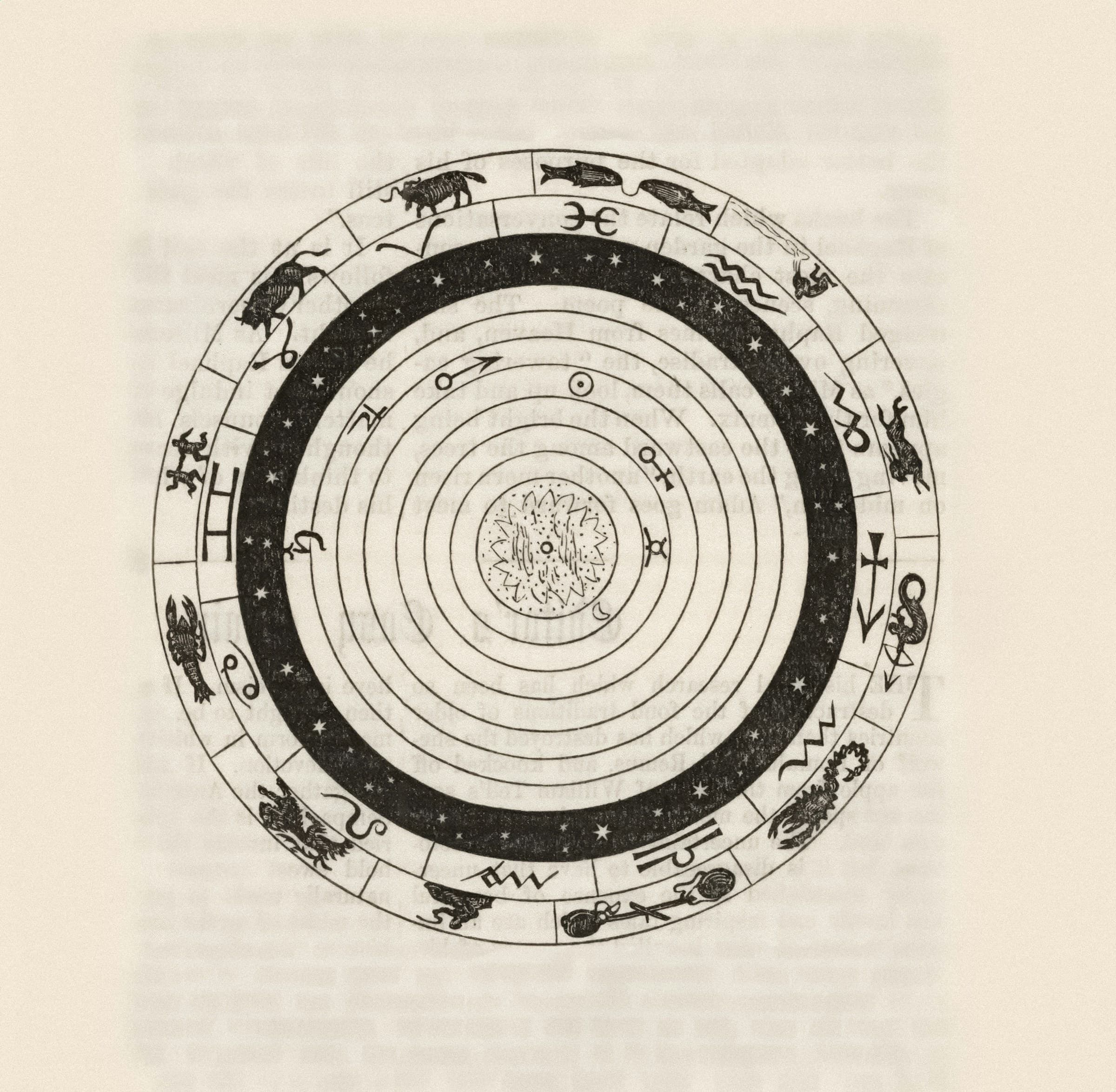
Each of the 27 stars, or nakshatras, of 13°20' is divided into 9 subs, sized in proportion to the Vimshottari years. That makes 27 × 9 = 243 subs. But some subs cross the border between two signs, and each piece gets its own number. That is why the table reaches 249 (KP Reader VI, p. 77).
An example from the book shows the math. Number 63 corresponds to the Ascendant between 0°00' and 0°33'20" of Cancer: sign of the Moon, star of Jupiter, sub of the Moon (KP Reader VI, p. 168). This Moon sub begins at 29°26'40" of Gemini. The part that falls in Gemini is number 62, and the part that falls in Cancer is 63. The same sub, two signs, two numbers.
The table begins with number 1, at 0° Aries, and ends with 249, at the end of Pisces. We checked the whole division by the Vimshottari years and it closes at 249 segments.
Someone always asks whether this is numerology. Krishnamurti's answer is direct: "It is pure, genuine Astrology" (KP Reader VI, p. 100). The number points to a segment of the zodiac. Nobody adds up digits.
How a judgment is put together
The solved cases in KP Reader VI always follow the same sequence.
- The question. A concrete doubt, asked seriously. The book says the prediction comes out right only with someone who asks in a serious and sincere way (p. 24).
- The number becomes the Ascendant. The twelve cusps come from the table of houses for the latitude of the place where the question is judged, "and not the place from which the query is put" (p. 100).
- The planets of the moment. The planetary positions are those of the instant of judgment (p. 276).
- The houses of the matter. In an employment case, the number given was 109, in Bombay, on 07/27/1969. For employment he judges houses 2, 6 and 10: the 2nd shows money, the 6th day-to-day work and the 10th the profession (p. 275). The significators follow the method's order of strength (p. 276).
- The ruler filter. The planets kept are those common to the significators and to the Ruling Planets of the moment (p. 186).
- The timing. The event comes in the conjoined period of these planets, and the transit points to the date (p. 186). In the employment case: "They will give you job in their conjoined period" (p. 276).
The question needs an object
"Will my life work out?" brings together too many matters for a single-question chart. "Will I get a new job this year?" has an object and a time frame.
Three things help you phrase it well:
- The event. What exactly you want to know.
- The interval. The period the answer covers.
- The arrival signal. How you will recognize that it happened.
This matters a lot for work. Leaving where you are and starting something new are separate events in the chart, with different houses, and each one calls for its own question. An interview, an offer and the first day on the job are also distinct milestones.
Prashna, Muhurta and the birth chart
The three tools deal with time and are often confused:
- Birth chart. Answers which phases and tendencies a person goes through over a lifetime.
- Prashna. Answers what happens with a specific situation asked about now.
- Muhurta. Chooses the best moment to start an action.
They share pieces of the same system, such as sub-lords, houses and rulers, and each one answers a type of question.
What Vedik does with the moment of the question
Vedik starts from your birth chart, which is why the birth time is required. Horary by a number from 1 to 249 is not part of the product.
What Vedik uses from Prashna is the moment. When you ask a timing question in the chat and share your location, the engine calculates the ruling planets of that instant, at the place where you are. They come in as a confirmation layer, alongside the active phase of your chart and the transit. The window of dates comes from the birth chart. The rulers of the moment confirm that window or fail to confirm it, and never create a new date.
The sub-lord of the Ascendant of the moment, a central piece of horary, stays out of the answer. It belongs to the chart of the question, and Vedik reads the birth chart. See how the layers add up in the article on convergence between dasha and transit.
If you do not know your birth time, start with how to handle an unknown birth time.
The method points out the path and the timing. The last word is always yours.
To see what your birth chart indicates about your question, create your free reading.