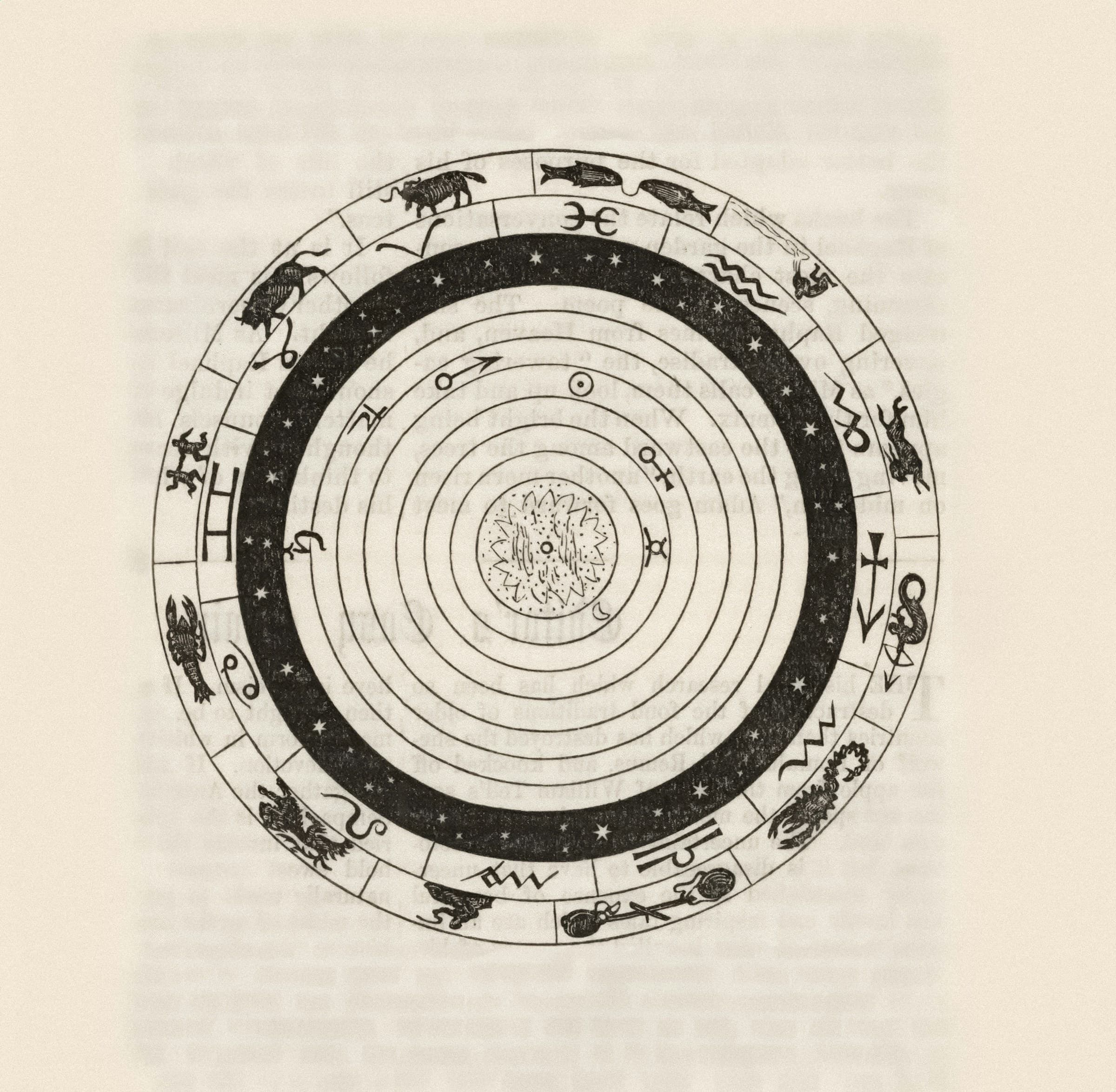
KP astrology (Krishnamurti Paddhati) is a method of astrology developed in India in the 20th century to answer specific questions based on precise astronomical calculation. Instead of describing personality, KP was designed for one thing: to give clear answers about concrete topics and moments in life, such as career, relationships and moves, based on a person's birth chart.
This guide explains what the method is, where it came from, how it works on the inside, and what it can and cannot answer.
Who Krishnamurti was and why he created a new method
K.S. Krishnamurti (1908-1972) was an Indian astrologer who spent decades bothered by two practical problems. The first: two competent astrologers looking at the same chart could reach different conclusions. The second, which he discusses in his own work, was twin births: two people with practically identical charts and completely different lives, which traditional methods could not tell apart. Traditional Vedic astrology (Jyotisha), with thousands of years of depth, left too much room for interpretation precisely at the points where an answer needed to be exact.
Krishnamurti started from the tradition and followed a path of his own. In one of his books, a section has a title saying that KP replaces traditional astrology. What he did was create a tiebreaker system: a set of finer rules, with less room for ambiguity, published in the six volumes of his KP Readers. The stated goal was that two practitioners of the method, faced with the same chart and the same question, would reach the same answer. That goal of rigor still guides the method today.
The problem KP solves: specific questions
Most of the astrology in circulation answers open questions: "what am I like?", "what does this year bring?". KP was built for the opposite kind of question, closed and concrete:
- Is this a good time to change jobs?
- Is this move to a new city likely to work in my favor?
- What phase is this relationship going through?
This difference matters. A method made to describe personality can be vague without failing. A method made to answer "yes, now" or "not yet" needs hard criteria, and that is what the structure of KP provides.
How KP works on the inside
Four pieces set the method apart. Each one has a technical name, and none of them requires you to memorize it to use a reading.
1. The fine subdivision of the zodiac (the sub-lords)
Vedic astrology divides the sky into 27 regions called nakshatras. KP goes one level further: it divides each nakshatra into 9 smaller, unequal parts, each ruled by a planet, the so-called sub-lord. The pure subdivision gives 243 subs (27 × 9). The number 249, which you will find in almost all KP literature, comes from a different count: the sub segments counted by sign (a sub that crosses the border between two signs counts twice), which is the basis of the horary number system from 1 to 249 used in the method. Both numbers are right. Each one counts a different thing.
This extra layer of subdivision is what allows two people born on the same day, a few minutes apart (the case of twins that motivated Krishnamurti), to have genuinely different readings. The sub-lord is the technical heart of the method. It breaks the ties that the traditional reading left open.
2. Its own astronomical starting point
Every astrological system that uses the sidereal zodiac (aligned to the stars, like the Vedic one) needs an astronomical adjustment called ayanamsa, the correction between the zodiac of the seasons and the zodiac of the stars, which shifts slowly over the centuries. Krishnamurti calculated his own, the KP ayanamsa, and defended it by checking it against the dates of events that had already happened. It is a technical detail with a practical consequence: in KP, minutes of difference in the birth time change the calculation, which is why the method takes data precision so seriously.
3. Houses calculated for the exact location
KP uses the Placidus house system, calculated for the exact place of birth, tailored to each person. Each area of life (work, relationships, home, resources) corresponds to a house, and the question you ask determines which houses the method consults.
4. Significators: the chain that links question and answer
To answer a question, KP builds a chain of responsibility: which planets answer for those houses, and what their sub-lords indicate. The procedure has defined steps, in a defined order, and within it there are stages that call for the practitioner's judgment, such as selecting which significators carry weight for the question asked. That is why the method is sometimes described as the most "mathematical" branch of Indian astrology: the path from calculation to answer can be traced, even where the practitioner's experience comes in.
KP, traditional Vedic and Western: the differences in one table
| Modern Western | Traditional Vedic (Jyotisha) | KP | |
|---|---|---|---|
| Zodiac | Tropical (seasons) | Sidereal (stars) | Sidereal, with its own ayanamsa |
| Typical question | "What am I like?" | Broad reading of life and cycles | "Will this move forward? When?" |
| Finest unit | Sign/aspect | Nakshatra (27 divisions) | Sub-lord (243 subs, 249 counting by sign) |
| Room for interpretation | High | Medium | Deliberately low |
| Age | ~2,000 years (current form: 20th century) | Thousands of years | 20th century |
No column in this table is "the right one". They are tools with different purposes, and KP is the right tool when the question is specific and timing matters.
What KP can answer, and what it does not promise
Being honest about limits is part of understanding the method.
What it does well: placing a concrete question in time. Showing whether the current phase supports what you are considering or not, which period tends to be more favorable, and why the phase is the way it is.
What it does not do: guarantee an outcome. It is worth being precise here. The astronomical part of KP is deterministic: positions, cusps and sub-lords always come out the same for the same data. The full reading, though, involves stages of practitioner judgment (such as selecting the significators relevant to the question), and life, in the end, is not deterministic. A serious KP reading offers context for a decision that remains yours. Any person or service promising certainty about an event ("such and such will happen on such a day") is promising more than the method can support.
How Vedik uses KP
Vedik is built on KP. It is the calculation engine behind every reading. In practice:
- Calculation first. Your birth data (date, time, place) become astronomical positions calculated with the rigor the method requires. Your chart page shows the sign, the house and the star (nakshatra) of each planet.
- Interpretation second. On top of the calculation, Vedik applies the KP rules and translates the result into human language. You get the reading of your moment without having to study sub-lords, houses or ayanamsas to use it.
- Question by question. Since KP was made for specific questions, the Vedik chat answers yours, with your chart already loaded, in your context, remembering what you have already talked about.
That is the combination Vedik brings: the rigor of the calculation on one side, simple access on the other.
---
Vedik reads your moment with the KP method behind it, without asking you to study any of this. Read your moment.