Quick summary
- K. S. Krishnamurti (1908-1972) was the Indian astrologer who created the KP system (Krishnamurti Paddhati).
- His great innovation was the Sub Lord, a subdivision of the zodiac that allows predictions with a date and time.
- The method is still studied and used today.
If you have heard of KP astrology, predictions with a date and time, or the mysterious concept of the Sub Lord, all of these paths lead to a single name: K. S. Krishnamurti. He created a method to point out the nature of an event and the moment it happens, two areas where, in his view, the Hindu and Western schools struggled. In this article you will learn about the life, work and legacy of Professor Krishnamurti, and understand why the system that bears his name is still studied decades after his death.
Who was K. S. Krishnamurti?
Prof. K. S. Krishnamurti (or simply KSK) was born on November 1, 1908, in Thiruvaiyaru, a small town northeast of the city of Thanjavur, in the state of Tamil Nadu, in southern India. He died in 1972, leaving behind an astrological system that is still in use today.
His birthplace could not be more symbolic. Thiruvaiyaru is the "sacred land of the five rivers" (Cauvery, Kollidam, Kudamurutti, Vennar and Vettar) and is considered as sacred as Kashi (Varanasi), one of the greatest spiritual centers of India. The town is also inseparable from the name of Saint Thyagaraja, a great devotee of Sri Rama and one of the three central figures ("Trimurti") of Carnatic music. It was in this setting of intense spirituality that Krishnamurti was initiated into spiritual practice by the Sanskrit poet and scholar Brahmasree Sundaresa Sarma.
Unlike the image many people have of an isolated mystic, Krishnamurti was a man of simple habits, methodical and deeply committed to research. After finishing his studies at St. Joseph's College, in Tiruchirapalli, he joined the civil service on July 14, 1927, in the Public Health Department of the Tamil Nadu government, working at the King Institute, in Guindy, Madras (now Chennai). It was while balancing his government career with the study of the stars that he began to develop the ideas that would give rise to Krishnamurti Paddhati. The Sanskrit word "paddhati" means "system" or "method".
What set Krishnamurti apart from his contemporaries was his insistence on an approach he described as scientific, clear and verifiable. He studied both Hindu and Western astrology in depth, but was deeply disappointed by the lack of precision in both. He did not use rituals, "spirits" or vague language to shield himself from mistakes. His predictions, according to accounts from the time, were direct, unambiguous and often surprisingly accurate.
His path: from civil servant to "Jyotish Marthand"
The big turning point in Krishnamurti's life came in 1961, when he chose to retire voluntarily from the civil service to devote himself fully to astrology. From then on, he began an intense journey spreading his method across India.
He traveled to countless cities, from Poona and Kolhapur to Delhi, Bombay and Madras, giving daily lectures, often for weeks at a time, at the request of astrologers eager to learn his technique. Students came from far away and stayed for months to study with him. His reputation grew quickly, and more and more people sought his consultations.
To give this work a structure, Krishnamurti founded the Modern Stellar Astrological Research Institute, in Madras (now Chennai). And in 1963 he launched the monthly magazine "Astrology and Athrishta", a publication dedicated to spreading his system in India and in countries of the East and the West.
Recognition came in the form of honorary titles. Convinced by the precision of his predictions, Kulapati K. M. Munshi, chancellor of the Bharatiya Vidya Bhavan, appointed Krishnamurti visiting professor of astrology, responsible for giving regular lectures in Delhi, Bombay and Madras. He received the title "Jyotish Marthand", along with a gold medal. In June 1970, at the invitation of the Malayan Astrological Society, he visited Kuala Lumpur, where he was honored with the title "Sothida Mannan" ("King of Astrology") and another gold medal. Around the same time, he traveled to Sri Lanka to meet the requests of students there.
After his death, his son, K. Subramaniam, trained by his father himself, took over as editor of the magazine and took on the mission of preserving and spreading the legacy of the system.
What is the KP system (Krishnamurti Paddhati)?
To understand Krishnamurti's importance, you need to understand the problem he set out to solve. Traditional Vedic astrology is rich and deep, but it does not always offer objective answers. Two astrologers can look at the same chart and reach different conclusions. The same event can be "promised" by several conflicting factors.
The KP system was born precisely from the search for objectivity. It is a method of predictive astrology that combines elements of Vedic (sidereal) astrology with the technical precision of Western astrology. Its core features are:
- Placidus house system: instead of dividing the zodiac into twelve equal houses of 30 degrees, KP uses the Placidus system, which calculates the cusps (the starting points of each house) based on the exact latitude and longitude of the place of birth. This makes each chart unique and sensitive to tiny differences in time and place.
- Its own ayanamsa: KP uses the Krishnamurti Ayanamsa, a specific adjustment between the sidereal and tropical zodiacs. Krishnamurti argued that only his was correct.
- Analysis by the cusps: in KP, the focus of the analysis falls on the house cusps more than on the position of the planets.
- Vimsottari Dasa: the 120-year system of planetary periods used to determine when events happen.
The center of the method, however, is another piece: the Sub.
The great innovation: the "Sub" and the Sub Lord
Here is the insight that separates KP from everything that came before it. Krishnamurti's first major discovery came from an uncomfortable observation: he noticed that a planet, during its period, produced results tied to a house with which it had no connection by traditional criteria, neither by occupation, nor by lordship, nor by association or aspect. This opened his eyes to the supreme importance of the constellations (Nakshatras) in prediction. Through his research, he established that a planet's results are strongly modified by the lord of the constellation in which it is placed, the Star Lord.
But there was another, even more challenging puzzle: twins born a few minutes apart, in the same place, with the same ascendant and the same planetary positions, often have completely different personalities, health and destinies. If the chart was practically identical, what explained the difference?
The answer led him to create a new layer of division of the zodiac. To understand it, think of a hierarchy:
- Sign (Rashi): the zodiac divided into 12 parts of 30 degrees.
- Nakshatra (star or constellation): each sign subdivided into constellations of 13°20' each, for a total of 27 Nakshatras.
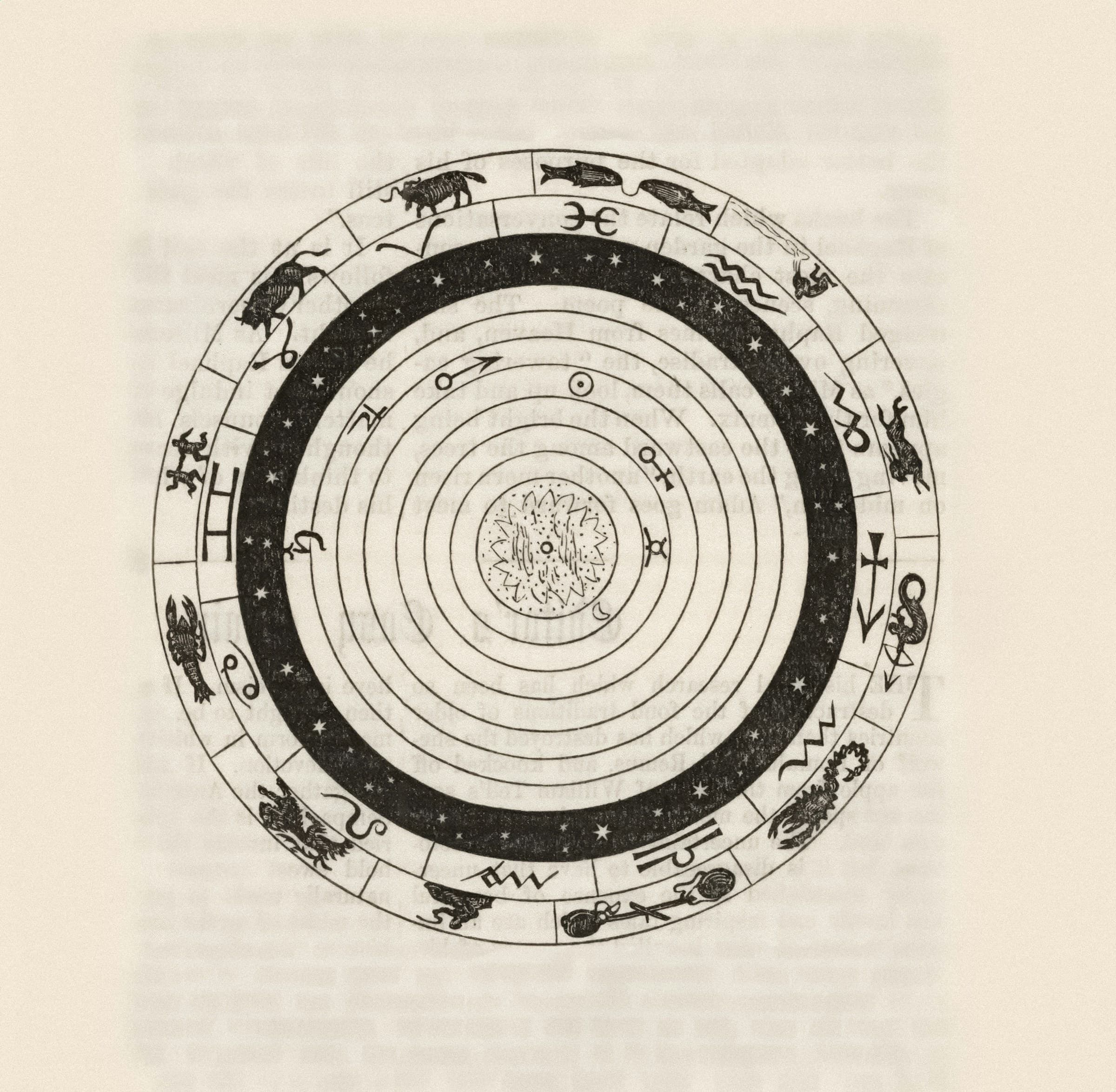
- Sub: the layer KSK added. Each Nakshatra is subdivided into nine unequal parts, following exactly the proportion of the Vimsottari Dasa. The result is 243 Subs across the whole zodiac (249 when counted by sign, because a Sub that crosses the border between two signs counts twice).
The lord of this Sub is called the Sub Lord, and it became the most important tool of the whole system. The core rule of KP is direct and powerful:
> The Sub Lord of the cusp of any house determines whether the matters of that house will materialize or not in the chart. In Krishnamurti's words, it is the sub, and the sub alone, that decides.
That is why, in the twins example, the Sub Lord changes much faster than the sign or the star. Those few minutes of difference change the Sub and, with it, the course of two lives.
In practice, the KP astrologer analyzes each point of the chart on three levels at once, forming what you could call the "script" of the event: the planet indicates the source or origin, the Star Lord gives the theme and the main result, and the Sub Lord gives the final verdict: yes or no. If the Sub Lord denies, the event does not happen.
Why is KP considered so precise?
The KP system's reputation for "getting it right with a date and time" comes from the combination of its tools. After establishing, through the Sub Lord, whether an event is promised in the chart, KP uses the Vimsottari Dasa and its subdivisions (Dasa, Bhukti, Antara and Sookshma) to pin down when it happens, even pointing to the month, the week and, in some cases, the day.
There is also an especially admired technique: the Ruling Planets, used to confirm predictions and even to rectify the exact time of birth when it is unknown. Krishnamurti also refined horary astrology (Prashna), in which the person asking picks a number between 1 and 249, each number corresponding to a Sub, and the astrologer casts a chart for the exact moment of the question, able to answer specific questions even without birth data.
It is worth noting what KP keeps in the background: yogas (traditional combinations) and planetary dignity (exaltation, debilitation). Krishnamurti wrote that having a yoga in the chart does not guarantee the result (KP Reader III, p. 179), although he still cites a yoga in the analysis of one case. In KP, what matters is what each planet signifies through the houses it rules and occupies, a paradigm shift that puts function above status.
Works and legacy of K. S. Krishnamurti
Krishnamurti condensed decades of research into a series of six volumes known as the "Krishnamurti Padhdhati Readers", which include titles dedicated to horary astrology (Horary Astrology) and to transits (Gocharapala Nirnayam). In these books, he explains the principles and methods of the system. To this day, this collection is required reading for anyone who wants to study the system seriously.
The impact of his work crossed borders. What began as lectures in Indian cities now has schools, specialized software and online communities dedicated to KP.
More than a set of techniques, Krishnamurti's greatest legacy may be a philosophy: that astrology could, and should, be treated with the same rigor as any serious investigation, offering clear, testable and verifiable answers instead of vague predictions. It was this ambition that turned him from a Tamil Nadu civil servant into "Sothida Mannan", the king of astrology, revered by his students simply as Guruji.
Conclusion
K. S. Krishnamurti created an astrological system aimed at answering whether an event will happen and when. By inventing the Sub and placing the Sub Lord at the center of the analysis, he gave astrologers a tool to answer, with unusual clarity, the question that matters most to anyone who asks: will this happen, and when? Half a century after his passing, Krishnamurti Paddhati is still studied and applied.
This article is informational and cultural in nature. Astrology does not replace professional advice on health, finances or personal decisions.