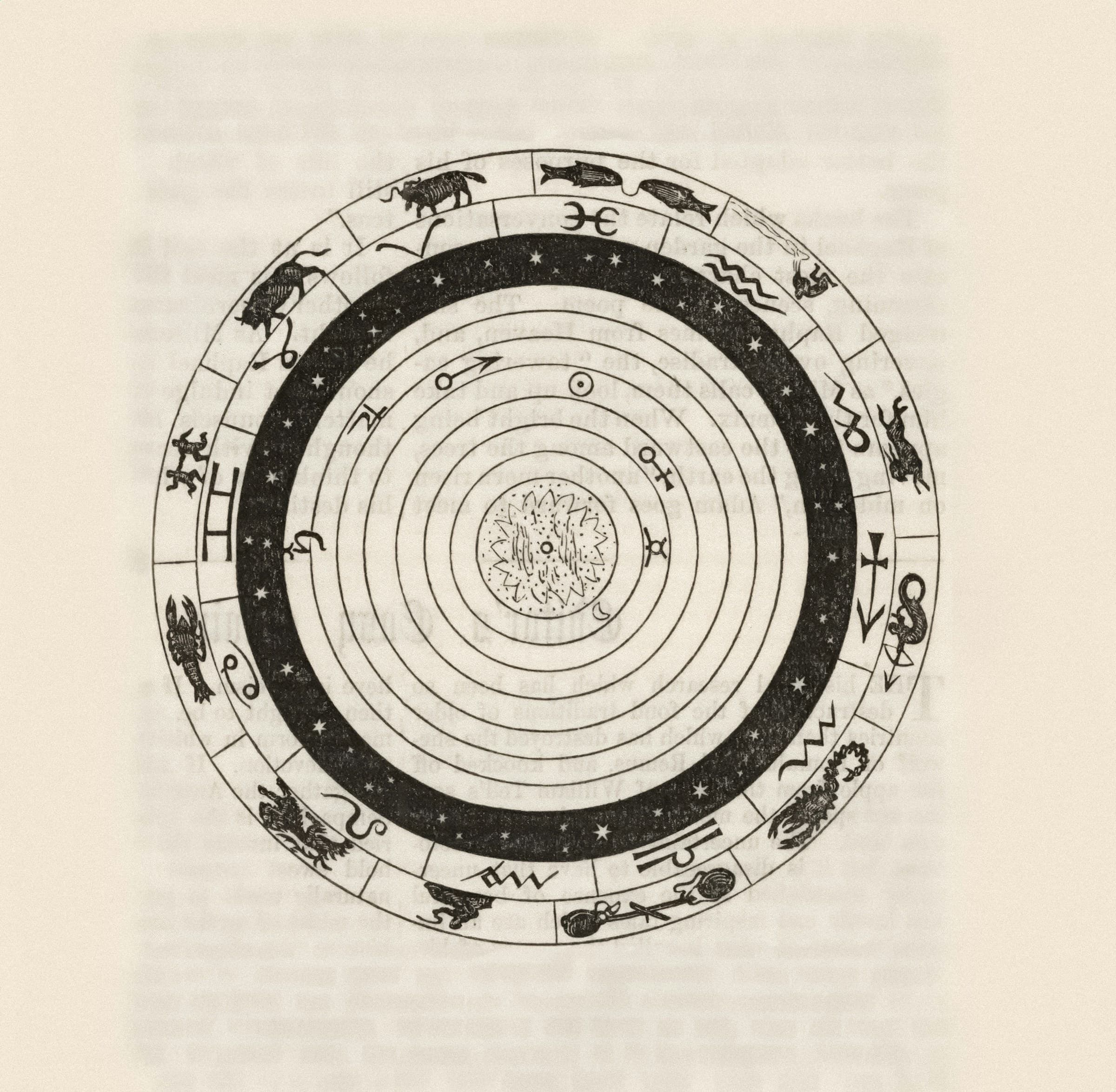
Predictive astrology is the set of techniques that read time: the phase you are going through, what it favors and when a matter tends to move. Each tradition created its own tools for this. For the question "when", KP (Krishnamurti Paddhati) was designed to get down to the detail of the period, and it is the method Vedik uses.
Each method answers a question
Think of a job change. "What kind of work suits me?" calls for a profile. "Is there a change in this period?" calls for a phase. "In which month does this tend to happen?" calls for resolution. The classical methods cover these layers in different ways.
| Method | What it reads | Typical question |
|---|---|---|
| Birth chart | The sky at birth, with houses and planets | What themes mark my career? |
| Dashas | The planetary periods of life | Which phase is active now? |
| Transits | Today's planets over the birth chart | What does the current sky activate in me? |
| Prashna | The chart of the moment of the question | How does this specific question look? |
| Muhurta | Choosing a moment to start something | When to open, sign, travel? |
| KP | Houses, stars and subdivisions, together with the periods | When does this matter tend to move? |
These techniques work together. KP uses dashas and transits. Horary astrology exists in several schools, and KP has its own, explained in the post on Prashna. An experienced astrologer combines layers through years of practice. Each of them carries centuries of observation.
Dashas and transits: the foundation of timing
A dasha is the planetary period that rules a phase of your life. In the Vimshottari system, the nine rulers add up to 120 years, and the position of the Moon at birth defines where the sequence begins. Within each dasha run sub-periods, the bhuktis, and within them even smaller periods. The post on bhukti shows how these layers fit together.
A transit is the position of the planets in the sky right now. Vedic astrology crosses the two. The period says what is open in your life. The transit helps say when it happens.
Where KP gains resolution
K. S. Krishnamurti studied classical astrology in depth and built KP on top of it. He explains that he focused his research on the charts of twins (KP Reader VI, Introduction). Twins are born minutes apart, have nearly identical charts and live different things. He needed a finer ruler.
His answer was the sub. The zodiac is divided into 27 nakshatras, the stars of Vedic astrology, each one spanning 13°20′. Krishnamurti divided each nakshatra into nine parts, sized in proportion to each planet's years in the Vimshottari (KP Reader VI, p. 76). The ruler of each part is the sub-lord. The post on how to calculate the sub-lord does the math step by step.
With the sub, KP works with three pieces:
- The cusp as the start of the house. Each house begins at an exact degree and runs to the next cusp, which is why houses have unequal sizes.
- Significators in order of strength. The planets linked to a house are ranked from strongest to weakest, and KP knows who answers first for each matter.
- Conjoined period. The event happens when the dasha, bhukti and antara of significators of the matter coincide, and the transit confirms it (KP Reader VI, p. 186).
This combination is what takes KP from "what phase is this" to "in which stretch of the period this tends to happen". For anyone who needs to decide, that difference matters.
What Vedik does with the method
Vedik has its own engine. It calculates the positions of the planets with the Swiss Ephemeris, uses Krishnamurti's own ayanamsa and Placidus houses. The commitment is to fidelity to the calculation he published.
When you ask VedikAI about "when", the answer comes as a stretch of a period, in month and year, with the start and end of the sub-period that supports the matter. The method points to the window in which the matter has strength. What to do with it is your choice. The last word is always yours.
Which method fits your question
- Want to understand how you deal with work, money or love? Start with the birth chart.
- Want to know which phase is active and what it favors? Look at the dashas.
- Want to know in which month a matter tends to move? Use KP, with period and transit.
- Have a one-off question, without your birth time at hand? Horary astrology works with the moment of the question.
If your question is about what lies ahead in the next few months, the first step is to see your cycles. Create your free reading and see which phase you are in.