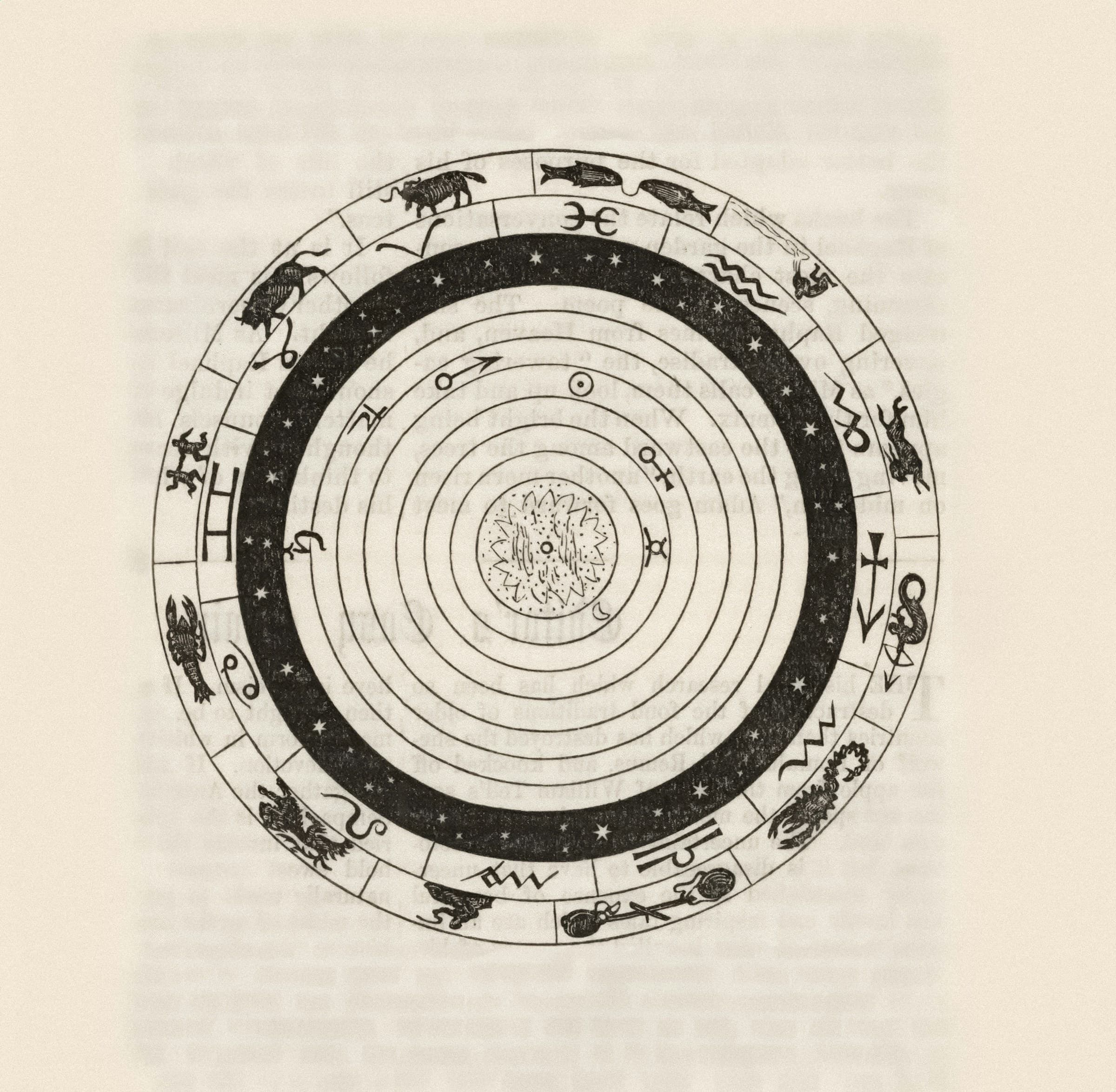
The sub-lord is the ruler of one of the nine parts into which KP divides each nakshatra. The parts have different sizes, proportional to each planet's years in Vimshottari. The calculation fits in one line: 800′ × the planet's years ÷ 120.
Why Krishnamurti created the sub
K. S. Krishnamurti says he focused his research on the charts of twins (KP Reader VI, Introduction). Twins are born minutes apart and live different things. He observed that the classical principles, applied the same way to both, gave the same result for opposite lives. He needed a finer division of the zodiac.
The solution is in Reader VI: each nakshatra is divided into nine parts, of unequal sizes, in the proportion of the Vimshottari years (KP Reader VI, p. 76).
The unit of the calculation
The zodiac has 27 nakshatras, the stars of Vedic astrology. Each one measures 13°20′. Since a degree has 60 minutes of arc, each nakshatra measures 800′.
Vimshottari is the system of planetary periods in Vedic astrology. The nine planets add up to 120 years: Ketu 7, Venus 20, Sun 6, Moon 10, Mars 7, Rahu 18, Jupiter 16, Saturn 19 and Mercury 17 (KP Reader I, p. 82).
The size of each sub comes from the planet's share of those 120 years:
Sub size = 800′ × the planet's years ÷ 120
Here, a minute is a measure of angle. It has nothing to do with the clock.
The full table
| Planet | Years | Calculation | Sub size |
|---|---|---|---|
| Ketu | 7 | 800 × 7 ÷ 120 | 0°46′40″ |
| Venus | 20 | 800 × 20 ÷ 120 | 2°13′20″ |
| Sun | 6 | 800 × 6 ÷ 120 | 0°40′00″ |
| Moon | 10 | 800 × 10 ÷ 120 | 1°06′40″ |
| Mars | 7 | 800 × 7 ÷ 120 | 0°46′40″ |
| Rahu | 18 | 800 × 18 ÷ 120 | 2°00′00″ |
| Jupiter | 16 | 800 × 16 ÷ 120 | 1°46′40″ |
| Saturn | 19 | 800 × 19 ÷ 120 | 2°06′40″ |
| Mercury | 17 | 800 × 17 ÷ 120 | 1°53′20″ |
Add up the nine sizes and you get back to the 13°20′ of the nakshatra. The Venus sub is the largest and the Sun sub is the smallest, because Venus has the largest share of the cycle and the Sun the smallest. The size measures the division. The planet's strength in the reading comes from other rules.
In what order the subs come
The first sub of each nakshatra belongs to its ruler. The others follow the Vimshottari order (KP Reader I, p. 88). Ashwini, the first nakshatra, starts at 0° Aries and is ruled by Ketu. Its subs look like this, counted from 0° Aries:
| Sub | Starts | Ends |
|---|---|---|
| Ketu | 0°00′00″ | 0°46′40″ |
| Venus | 0°46′40″ | 3°00′00″ |
| Sun | 3°00′00″ | 3°40′00″ |
| Moon | 3°40′00″ | 4°46′40″ |
| Mars | 4°46′40″ | 5°33′20″ |
| Rahu | 5°33′20″ | 7°33′20″ |
| Jupiter | 7°33′20″ | 9°20′00″ |
| Saturn | 9°20′00″ | 11°26′40″ |
| Mercury | 11°26′40″ | 13°20′00″ |
A planet at 2°00′ Aries falls in Ashwini, in the Venus sub. It has three rulers: Mars by sign, Ketu by star and Venus by sub.
The next nakshatra, Bharani, belongs to Venus. It starts with the Venus sub and continues with the Sun, Moon, Mars and so on.
243 subs and 249 numbers
The pure division of the nakshatras gives 27 × 9 = 243 subs.
Counting by sign gives 249. Some subs cross the border between two signs, and each side counts as a different combination of sign, star and sub. Krishnamurti explains this in Reader VI itself: 243 divisions that become 249 because certain subs fall in two neighboring signs (KP Reader VI, p. 77).
An example: in Krittika, ruled by the Sun, the Rahu sub runs from 29°13′20″ Aries to 1°13′20″ Taurus. The part in Aries and the part in Taurus count separately. Doing the calculation across the 27 nakshatras, six subs cross a sign border. That is 243 plus 6, which gives 249.
The numbers from 1 to 249 used in KP horary astrology come from this count. The person picks a number, and it indicates a sign, a star and a sub (KP Reader VI, p. 100).
Close to a border
The astronomical part is deterministic. With the same date, time, place and ayanamsa, anyone reaches the same sub-lord. When the planet or the cusp is close to the limit between two subs, a few minutes of clock time or a change of ayanamsa changes the result. The post on ayanamsa shows how much that change weighs.
The sub-lord is one piece of the reading. KP uses this ruler together with the houses of the matter, the significators and the periods. On Vedik, the position of the planets comes from the Swiss ephemeris with Krishnamurti's own ayanamsa, faithful to the calculation he published. To see the method applied to your chart, create your free reading.