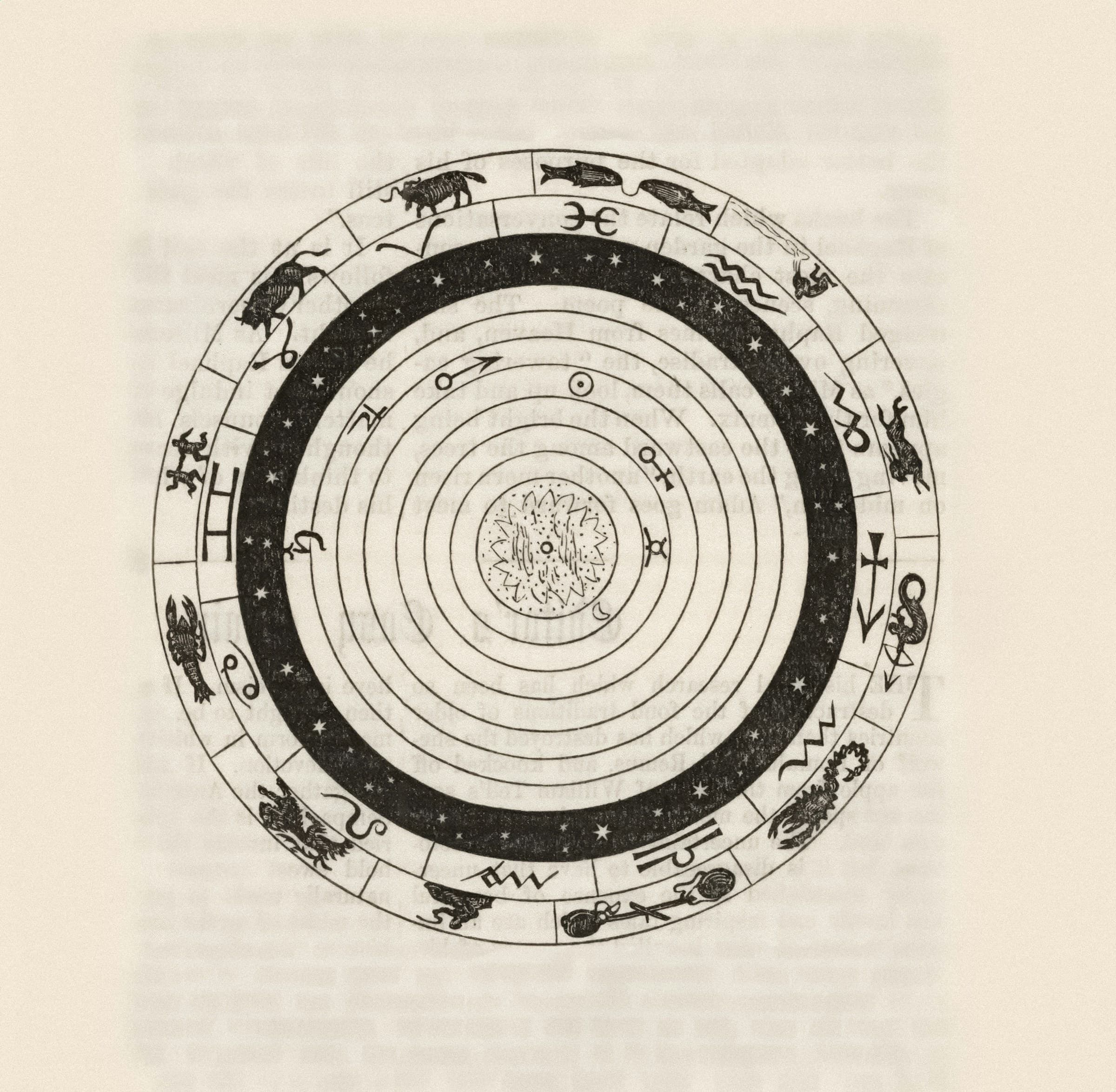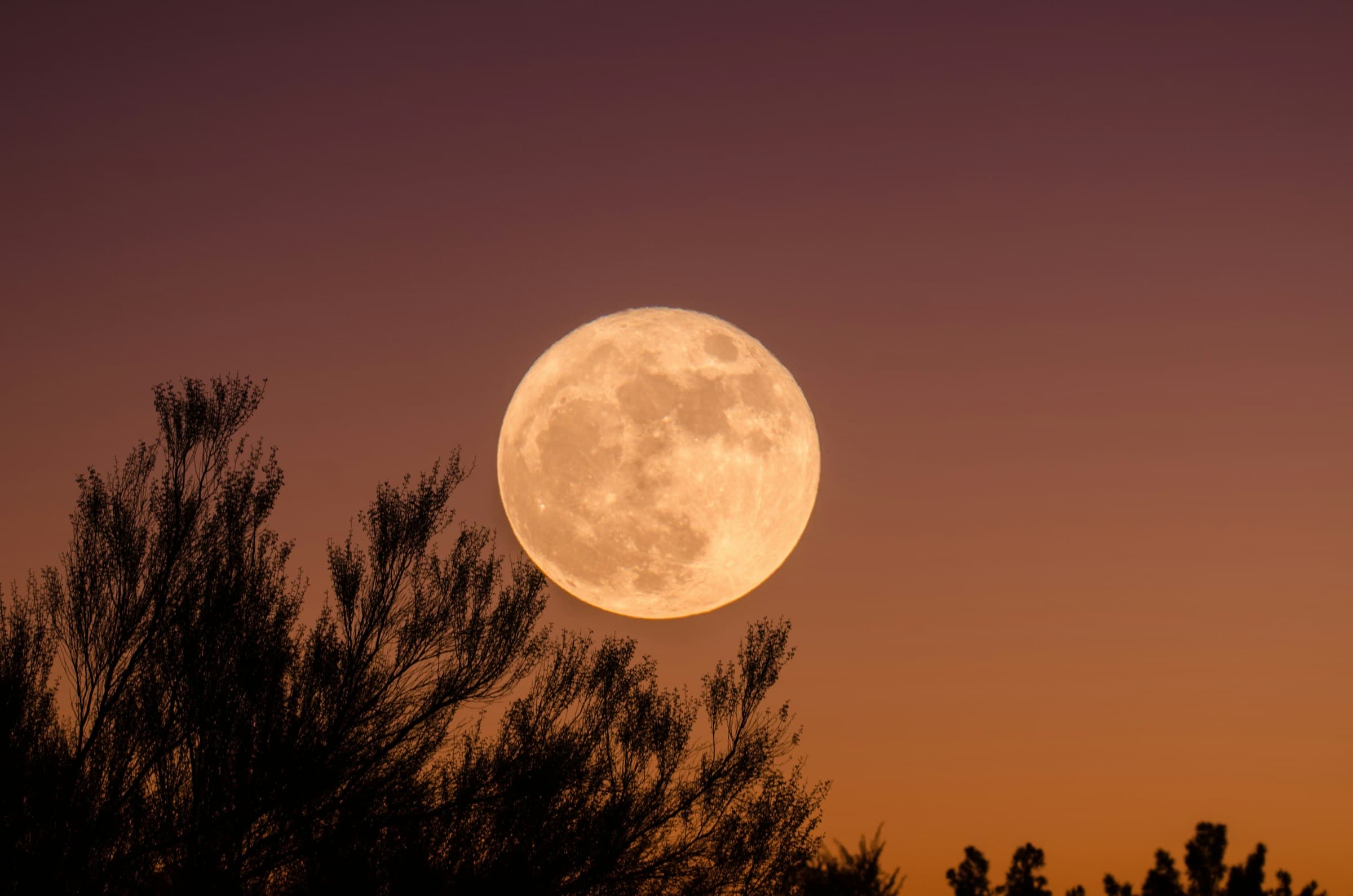
Your Moon sign is the sign the Moon was in when you were born. In Vedic astrology it's called Chandra Rashi, or just Rashi, and it's measured in the sidereal zodiac. In KP it carries weight in two places: the Moon's star sets the first period of your life, and the Moon's sign and star are part of the rulers of the moment.
Sun, Moon and ascendant
Each one locates something different at the same moment:
| Position | What it locates |
|---|---|
| Sun sign | Where the Sun was |
| Moon sign (Rashi) | Where the Moon was |
| Ascendant (Lagna) | The point of the zodiac rising in the east, at the time and place of birth |
All three can fall in different signs. Each one has its role in the reading, and none cancels out the others.
Why the sidereal Moon lands at a different point
The sidereal zodiac counts degrees from the stars. The tropical zodiac, used in the Western horoscope, counts from the equinox. The distance between the two is the ayanamsa. By Krishnamurti's own ayanamsa, it was 23°45′ at the start of 2000, according to the Swiss Ephemeris.
Here's an example. A Moon at 10° Cancer in the tropical zodiac, in 2000, falls at 16°15′ Gemini in the sidereal zodiac. The Moon is the same. What changed is the point it's measured from. With a difference close to 24°, the Moon only stays in the same sign in both zodiacs when it's in the last 6 degrees of the tropical sign. In the other cases, it shows up in the previous sign. The post on ayanamsa shows where this number comes from.
The Moon moves about 13° a day, a little more than half a degree per hour. Anyone born with the Moon near the end of a sign depends on the correct time to know which side of the boundary it's on.
Sign, star and pada
The sign is a division of 30°. The star, or nakshatra, is another: there are 27 of 13°20′. Each star has four parts of 3°20′, called padas. Each sign has nine padas, and the zodiac has 108.
Krishnamurti uses an example with the Moon at 16° Taurus (KP Reader I, p. 87). The full calculation:
- The Moon sign is Taurus, ruled by Venus.
- The star is Rohini, ruled by the Moon. It runs from 10° to 23°20′ Taurus (KP Reader I, p. 88).
- The Moon is 6° past the beginning of Rohini. The first pada runs from 0° to 3°20′ and the second from 3°20′ to 6°40′. The Moon is in pada 2.
A star can span two signs. In a dialogue in KP Reader I, a person tells Krishnamurti that their star is "Visaka 4th quarter in Scorpio sign", and he replies that their rulers are Jupiter and Mars (p. 63). The calculation explains it: Vishakha, Jupiter's star, runs from 20° Libra to 3°20′ Scorpio. The fourth pada is the stretch from 0° to 3°20′ Scorpio, Mars's sign. The star and the sign give the two rulers.
Where the Moon carries weight in KP
In the calendar. Vimshottari begins with the ruler of the Moon's star, with the balance left before it leaves that star (KP Reader I, p. 82). With the Moon at 16° Taurus, the first period is the Moon's, with 5 years and 6 months. The calculation is in how to calculate the Vimshottari Dasha.
In the rulers of the moment. The Ruling Planets are the rulers of the day, of the Moon's sign and star, and of the ascendant's sign and star at the moment of judgment (KP Reader VI, p. 184). The post on Ruling Planets shows how they come into the timing.
In the houses, the ascendant rules. Krishnamurti once wrote that one could start from the Moon sign when the ascendant was afflicted. After his research with twins, he noticed that between one birth and the next the Moon barely moves while the ascendant changes, and he revised the rule: he asked readers to take only the ascendant and never the Moon sign for the houses (KP Reader III, pp. 432 and 433). In KP the houses start from the ascendant and the cusps.
Which sign forecast to read
Vedic forecasts by sign usually start from the Moon sign and talk about the transits over it, for a large group of people. To read yours, use your sidereal Moon sign. An individual reading adds the ascendant, the houses and the periods of your chart, and that's why it answers more specific questions. The post on horoscope and birth chart compares the two uses.
At Vedik
Your reading opens with the three main positions: ascendant, Sun and Moon, in the sidereal zodiac and with Krishnamurti's own ayanamsa. Next comes the guiding star, which is your Moon's star, with the pada from 1 to 4 and its ruler. The positions of the planets come from the Swiss Ephemeris. From there, the method shows your calendar of periods. The final word on what to do with it is always yours.
To see your Moon sign, your star and your pada, create your free reading.