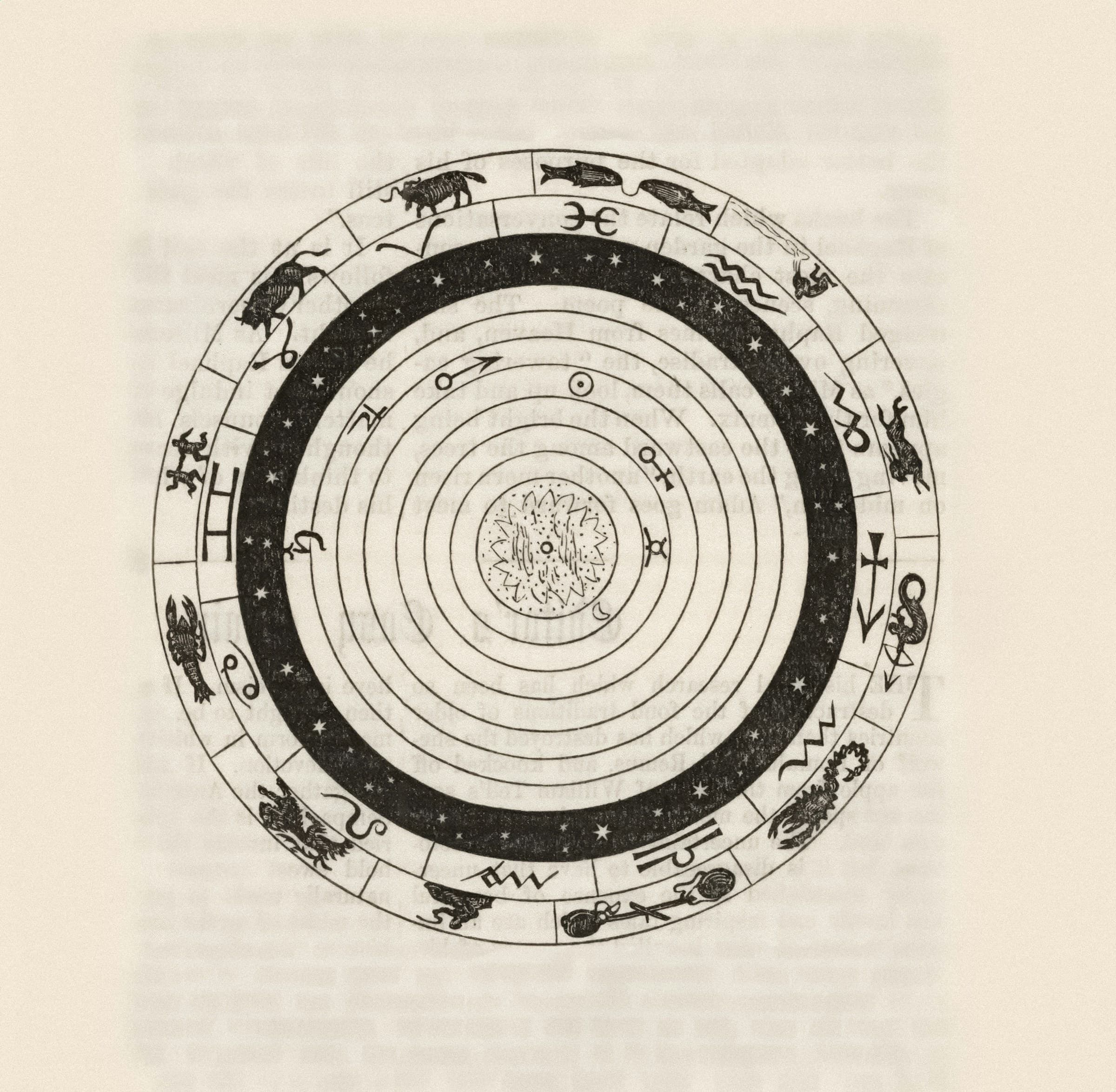
Two predictions differ, most of the time, because they were made with different settings or by different schools. The zodiac, the ayanamsa, the house system and the calculation of the nodes change the chart before any interpretation begins. Understanding these choices helps you read each answer within the method that produced it.
The first layer: the data
Everything starts with the date, the time and the city. Local time has to be converted to universal time using the time zone and the daylight saving time of that day. A birth in São Paulo in January 1990, for example, happened during daylight saving time. If one calculation applies that rule and another does not, the two charts end up one hour apart. The guide on daylight saving time and time zones shows how this happens.
At Vedik, the city sets the time zone using the IANA database, with each place's history, and the conversion comes out to the exact minute.
The second layer: the settings
With the same data, four technical choices change the chart.
Zodiac
Western astrology generally uses the tropical zodiac, anchored to the seasons. Vedic astrology uses the sidereal zodiac, anchored to the stars. Today the gap between the two is more than 20 degrees, which is why many people have the Sun in a different sign in each tradition. Both are coherent systems, each with its own reference. The full comparison is in Vedic and Western astrology.
Ayanamsa
Ayanamsa is the measure of the distance between the two zodiacs. There are several, and each one starts from a year when the zodiacs coincided. K. S. Krishnamurti records this difference in a table: Lahiri's ayanamsa places the coincidence in the year 285, and his in the year 291 (KP Reader I, p. 56). He himself considered the difference from Lahiri negligible (p. 57), and even so he told KP users to follow his ayanamsa (KP Reader VI, p. 243). The difference is small, and in KP it matters, because a sub can change with fractions of a degree. The guide on ayanamsa details the math.
Houses
There are several ways to divide the sky into twelve houses. KP uses Placidus houses, from the Raphael tables KSK adopted (KP Reader I, p. 43). Other schools use equal houses or whole signs as houses. A planet near a boundary can fall in different houses depending on the system.
Lunar nodes
Rahu and Ketu can be calculated as the mean node or the true node. The difference between the two can reach almost two degrees, enough to change the star or the sub of a node. See more in Rahu and Ketu.
The third layer: the school
Even with the same chart, each school answers along its own path. One reading may start from the current transits. Another may use the personal Vimshottari periods. A third may cast a chart for the moment of the question, as horary astrology does. These are different techniques, with their own tradition and merit, and it is natural for them to reach different answers to the same question.
In KP, the rule is explicit. The event happens in the period when the rulers of the dasha (major period), the bhukti (sub-period) and the antara (sub-sub-period) signify the houses of the matter, and transit confirms it (KP Reader VI, p. 186). The convergence between dasha and transit explains this math.
The fourth layer: the question
Two answers also differ when the questions are different without seeming so. "Will I leave my job?" and "will I get a new job?" are separate events in the method. Leaving looks at houses 1, 5 and 9, which negate the houses of employment, and getting a job looks at houses 2, 6 and 10 (KP Reader III, p. 195). That is why a reading can indicate leaving without indicating, in the same stretch, the start of something new. The time frame also counts: "in the next three months" and "in 2027" call for different answers.
Vedik's choice
Vedik chose fidelity to the calculation Krishnamurti published. The engine uses:
- sidereal zodiac with KSK's own ayanamsa
- Placidus houses
- mean node
- planetary positions calculated with the Swiss ephemeris
With this base, Vedik shows what the KP method indicates for your chart. The "when" answer comes in month and year, in the stretch when the periods signify the matter. When the method does not find a clear signal, the answer says so. And the last word on what to do is always yours.
If two readings you received disagree, check the four layers in this order. Almost always the difference shows up before interpretation.
To see what the KP method indicates in your chart, create your free reading.